Occupied Palestinian Territory (oPt)
The occupied Palestinian territory faces a protracted and deepening crisis, marked by decades of Israeli military occupation, where millions of Palestinians have long struggled to live with dignity under occupation.

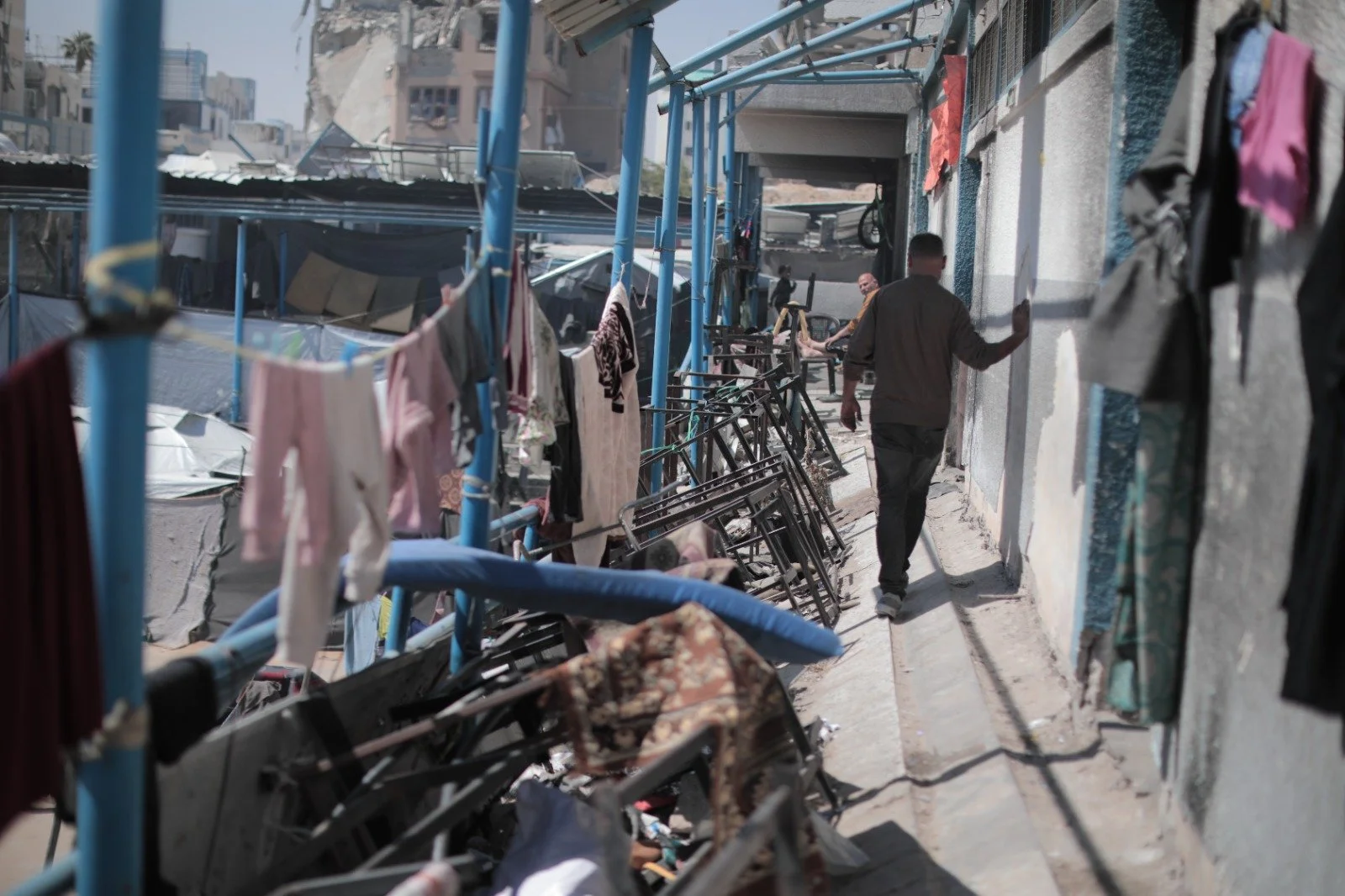
Image: Motaz Azaiza, Gaza, January 2024
Overview
The occupied Palestinian territory faces a protracted and deepening crisis, marked by decades of Israeli military occupation, widespread violations of international humanitarian law and human rights, and internal political divisions, where millions of Palestinians have long struggled to live with dignity under occupation.
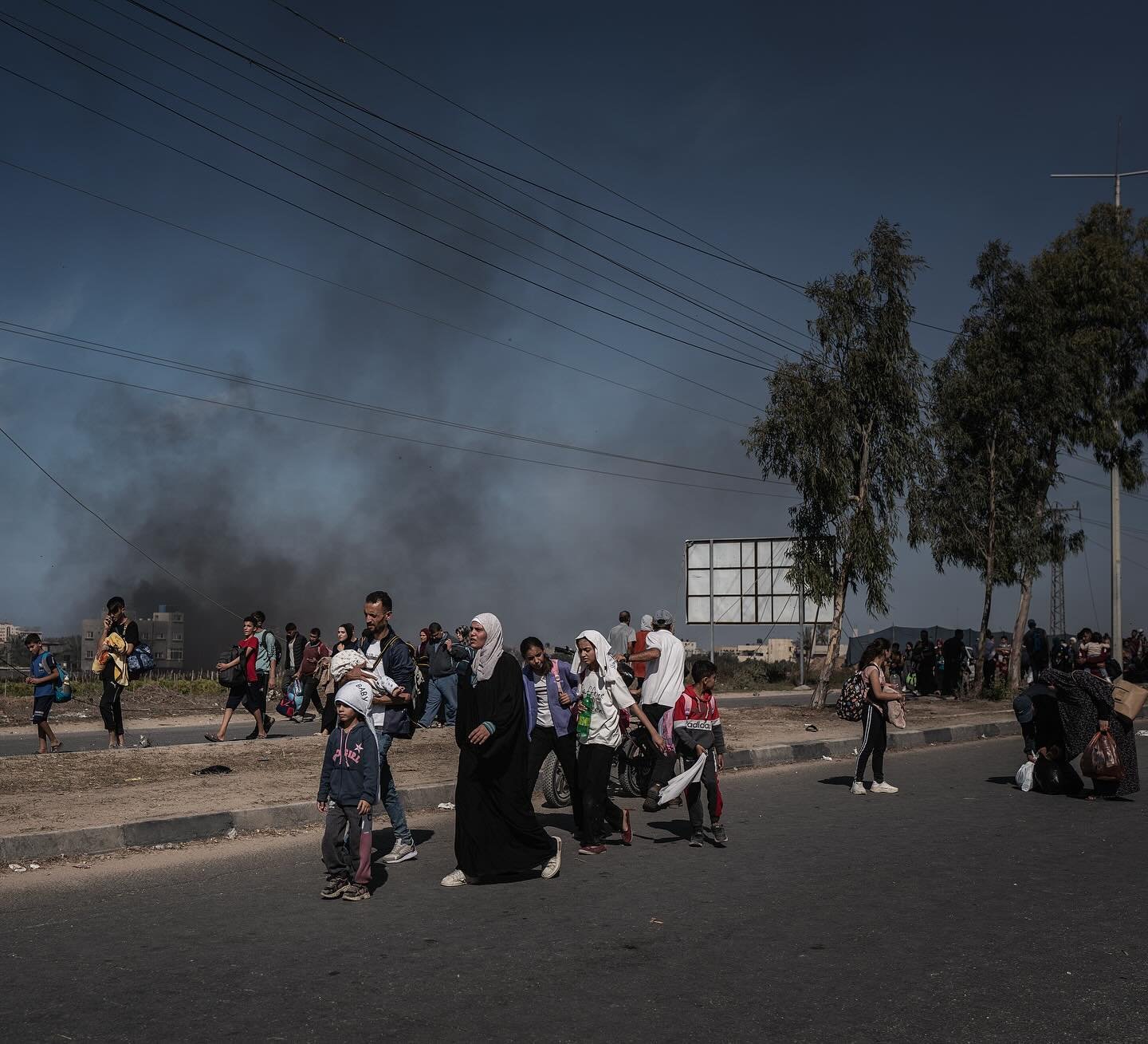
The Gaza Strip has endured over five decades of conflict, hunger and despair. The latest round of assaults began in October 2023 resulted in the killing of more than 67,000 Palestinians – 20,000 of whom were children, the injury of at least 169,000, and leaving millions of Palestinians displaced with nearly all critical infrastructure such as hospitals, schools destroyed. In October 2025, a ceasefire deal was brokered marking the end of the war, yet reports of airstrikes, shelling and gunfire continue to be reported across the strip.
“It’s not really adaptation – it’s survival by force. Life, and conditions were imposed on us, but we have no choice. ”
“No matter how much we describe to them the extent of the fatigue and suffering, we will not be able to describe it properly.”
In parallel, the West Bank is facing a rapidly worsening protection and humanitarian crisis characterised by rising violence, expanding displacement, economic decline, and severe constraints on civilian movement and access to essential services. These needs arise from systemic fragmentation and coercive policies that have been further exacerbated due to the intensification of raids by Israeli forces, growing expansion of illegal settlements and military bases, the imposition of checkpoints and physical obstacles further restricting Palestinian movement, safety and livelihoods.
“The percentage of checkpoints, gates and closures has increased... women have become afraid to travel because the cost of transportation is high, and there is no guarantee that it is possible to arrive on time. ”
“I had to sell gold to provide for my children, and now I don’t have a wedding ring. At the beginning of my marriage, I had to pawn my gold and pay off my husband’s debts worth 70,000 shekels (roughly 20,000 USD).”
Against this backdrop, the humanitarian community has been facing extreme barriers and restrictions to delivering humanitarian assistance to the population.
Our work
Since late 2023, GTS and Arab World for Research and Development (AWRAD) have been talking to people in Gaza to find out what the humanitarian situation looks like from their perspective. Our work has largely focused on giving space to communities to share their views, to elevate Palestinian voices, priorities, and realities to inspire and inform global action.
In 2023, our work was driven by the ambition to give communities in the Gaza Strip space to share and record their views took place before any other large-scale quantitative analysis of the humanitarian response
In 2024 we continued exploring how mutual aid was functioning in the Strip, what resources were available for communities in crisis and how these lifelines could be better supported.
In 2025, we sought to understand how Palestinians in Gaza were surviving – practically, socially, and emotionally – in a context of war, blockade and bombardment, by looking at their current coping mechanisms and priorities for recovery, as well as their access to aid systems.
Later in 2025, we spoke again with communities in the West Bank and the Gaza Strip to ensure that their perspectives guide both immediate humanitarian action and longer-term recovery efforts by informing the 2026 Flash Appeal and Humanitarian Response Plan for the oPt.
In 2026, we will continue this work with funding from Belgium, supporting not only aid actors in country, but also global policymakers and funders, to listen to the views, priorities and feedback of crisis-affected people.