Democratic Republic of the Congo
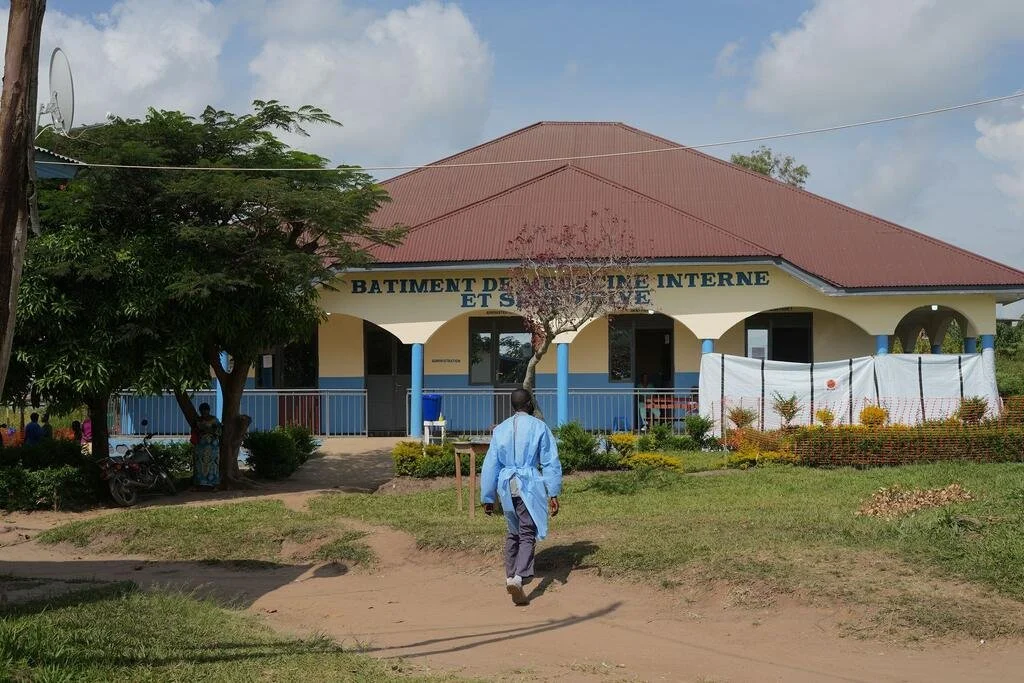
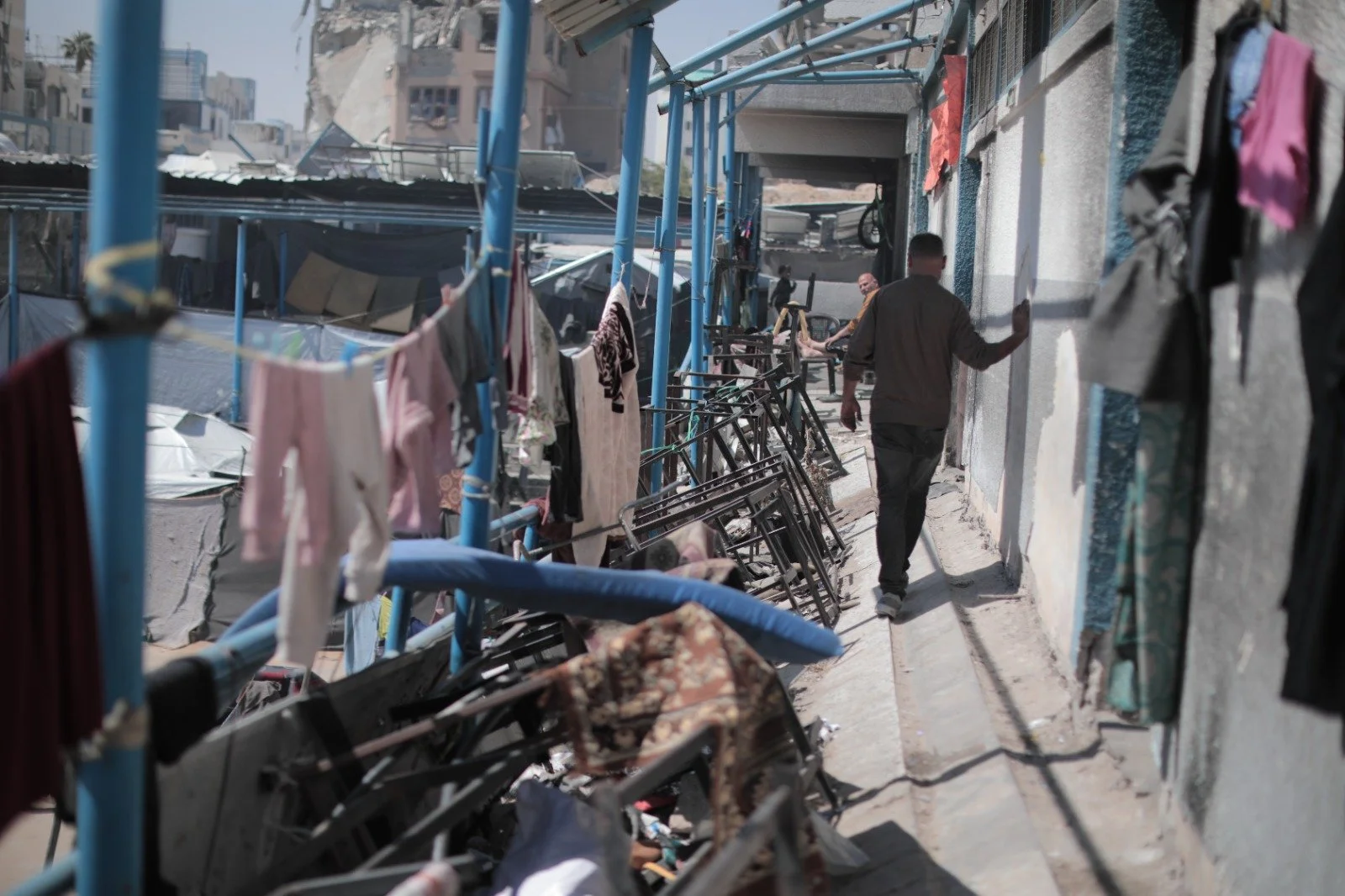
The Democratic Republic of the Congo (DRC) remains one of the most complex and protracted humanitarian crises in the world.
Overview
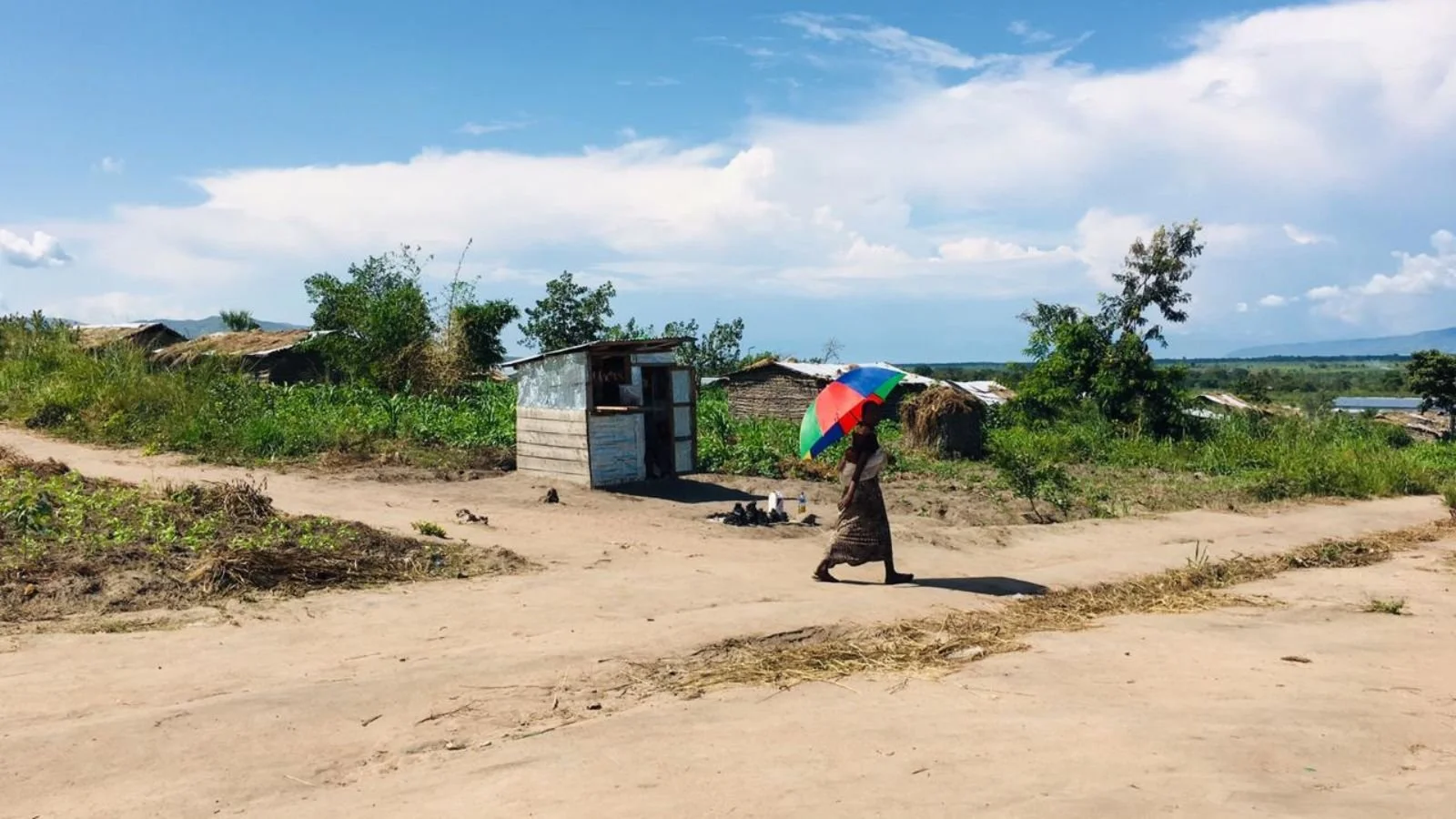
DRC has faced complex humanitarian crisis for decades, marked by large-scale displacement, limited access to basic services and frequent protection and human rights violations. In early 2025, the M23 seized control of Goma and Bukavu, and now controls large parts of both provinces, displacing millions of people and triggering deadly clashes across contested areas. Despite the “Declaration of Principles” signed by the DRC government and the M23 group in July 2025, and the peace agreement concluded with Rwanda a month earlier, the civilian population continues to suffer: there are near-daily reports of killings and severe and escalating human rights violations, ongoing displacement, and emergency levels of hunger.
Access to affected populations is severely limited, while significant funding cuts – particularly from the US – have forced many humanitarian actors to scale back or suspend operations. Communities already hit hard by conflict and hunger are now seeing their resilience stretched to breaking point under the weight of these overlapping crises.
Our work
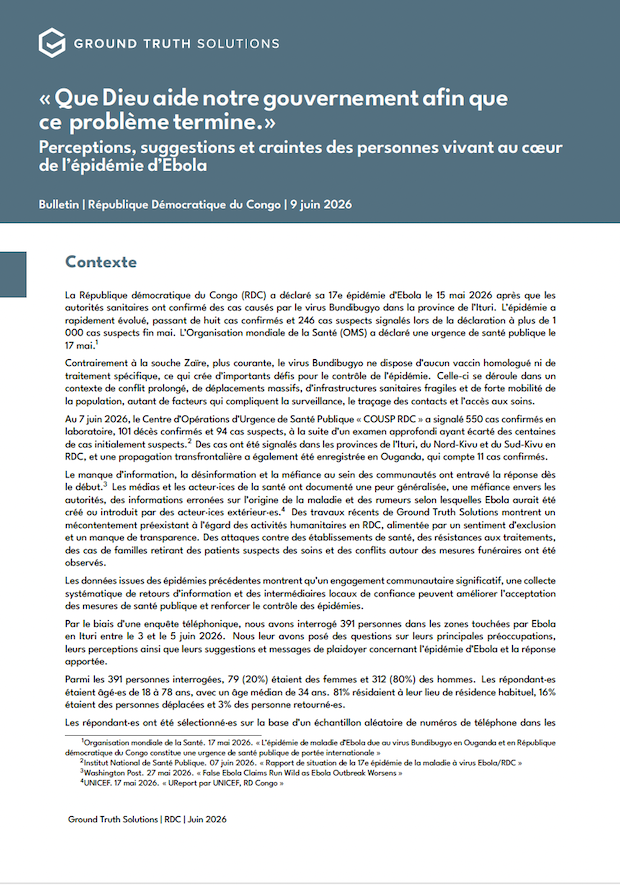
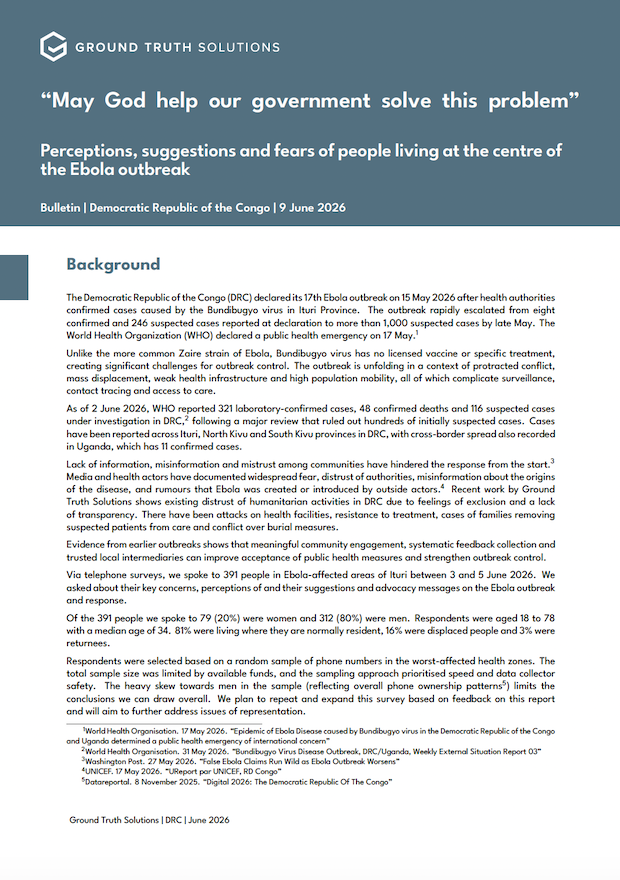
Since August 2022, we have been working in the DRC to ensure communities have a say in the aid they receive. We talk with people in the Eastern regions, listening to their experiences, sharing their concerns and expectations to humanitarian decision-makers, and advocating for the changes they want to see.
From 2022 – 2024, supported by USAID and UNICEF, we spoke with more than 2,500 people across Ituri, North Kivu, and South Kivu, through two face-to-face surveys and multiple rounds of focus group discussions. People shared their views on aid independence, safety concerns, what fair aid means to them, and how they want to participate in decisions.
We took these perspectives to where they could make a difference: presenting findings at humanitarian fora, among them the HCT, bringing communities’ concerns about MONUSCO to a global UN peacekeeping mission retreat in Uganda, and holding several recommendation workshops with aid actors. Community feedback from our work was integrated into the DRC Humanitarian Response Plan, and our findings have been shared widely through webinars, panel discussions, and a series of published reports available in our online library.
This work also enabled us to build a strong partnership with Victims Hope DRC, a Bukavu-based organisation.
“Humanitarians need to do more regular checks on their programmes. It’s been a year and a half now since we have received any food aid. We are only being assisted with hygiene kits, but we desperately need food.”
In response to the severe aid cuts since January 2025, Ground Truth Solutions conducted a rapid scoping with local researchers and community members in Bukavu and Goma to understand the immediate impacts of these cuts on people in crisis. Two urgent themes emerged:
Rising risk of mass recruitment by armed groups: With USAID-funded projects halted, thousands lost their jobs overnight. For many, armed groups are now seen as the only viable economic option.
“People may be forced to take up arms to survive. ”
Danger of growing mistrust toward aid actors: The funding cuts left communities feeling abandoned. There is real concern that returning agencies may be met with hostility.
“If the same organisation comes back, people may greet it with scepticism or anger.”
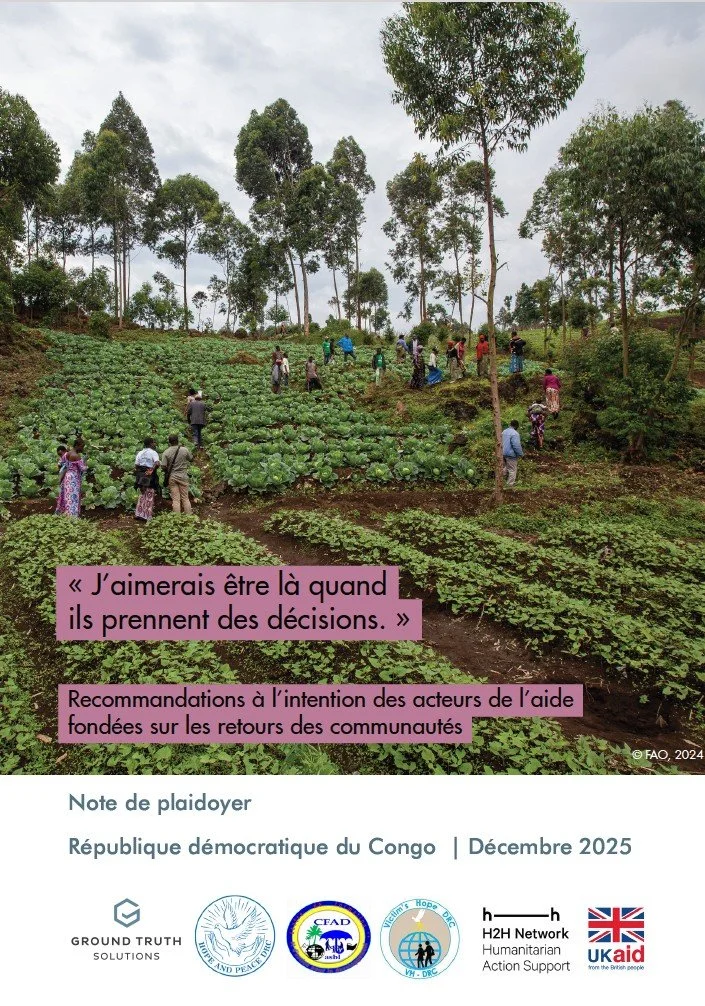
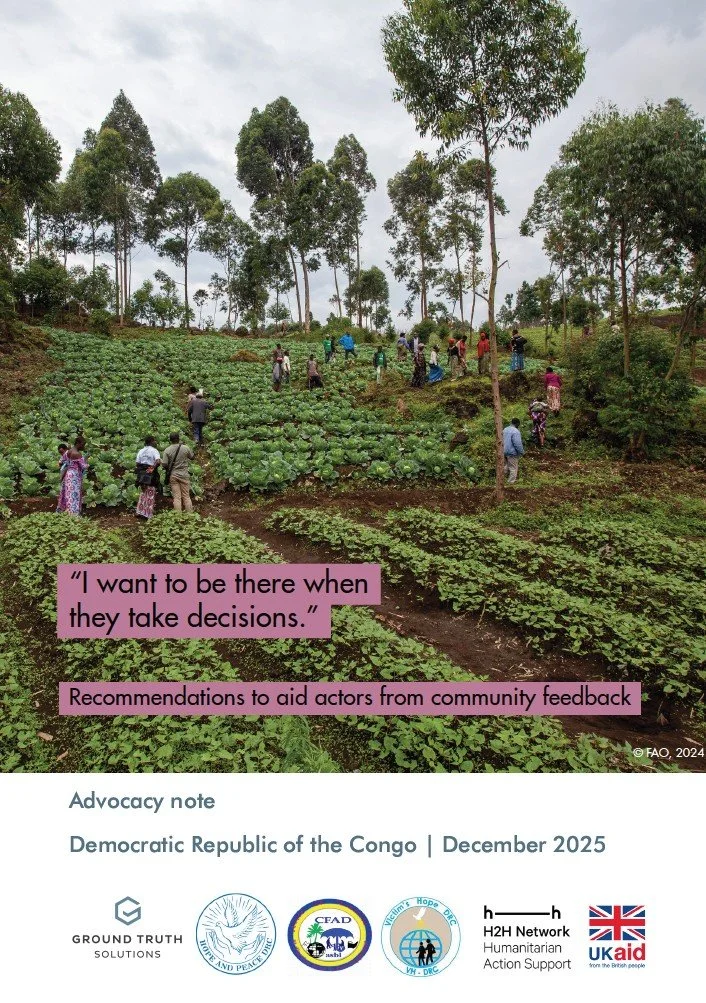
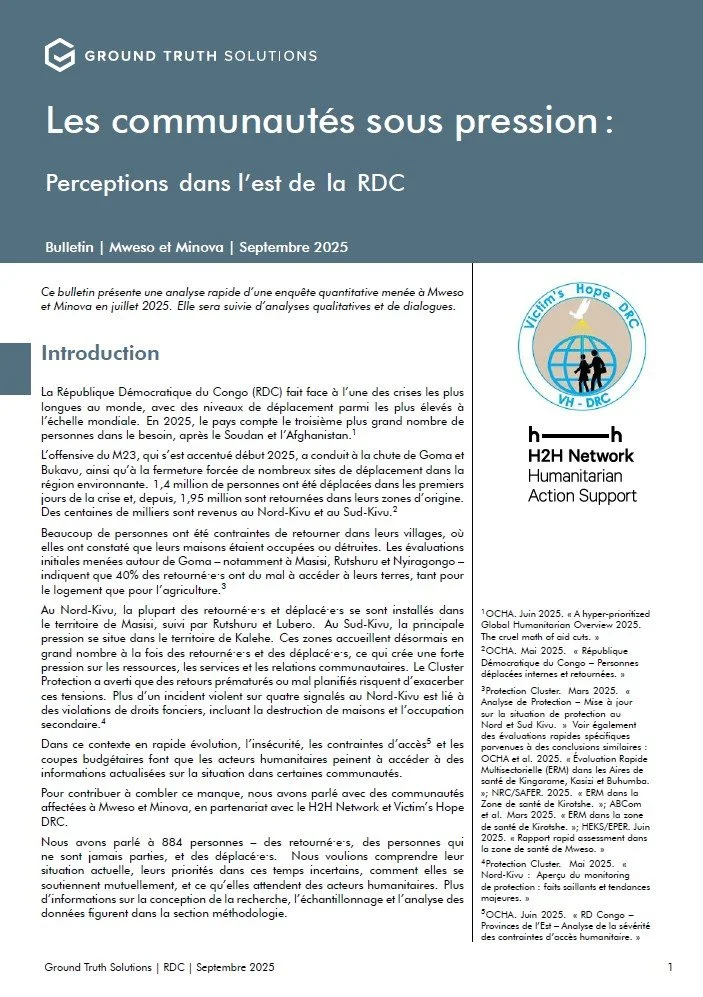
With support from the H2H Network, alongside our partners Victims Hope DRC and Hope and Peace DRC, Ground Truth Solutions conducted a project between April and December 2025, shifting its focus to community-led solutions, and the measures people are taking to strengthen their social cohesion and autonomy.
Focusing on returnee areas across North Kivu and South Kivu, the project built on our previous work and provided real-time, community-driven data on community priorities, social cohesion, mutual aid, and perceptions of safety. It brought community members and local aid actors into direct conversation, creating space for joint analysis and locally grounded solutions that can guide more adaptive humanitarian responses.
In 2026, we will continue this work with funding from Belgium, supporting not only aid actors in country, but also global policymakers and funders, to listen to the views, priorities and feedback of crisis affected people.
Our goal remains the same: to ensure that the voices of affected people are not only heard – but acted upon.
Donors
UNICEF, USAID BHA, H2H Network, FONGI, Belgian Federal Public Service (FPS) Foreign Affairs, Foreign Trade and Development Cooperation