Somalia
Overview
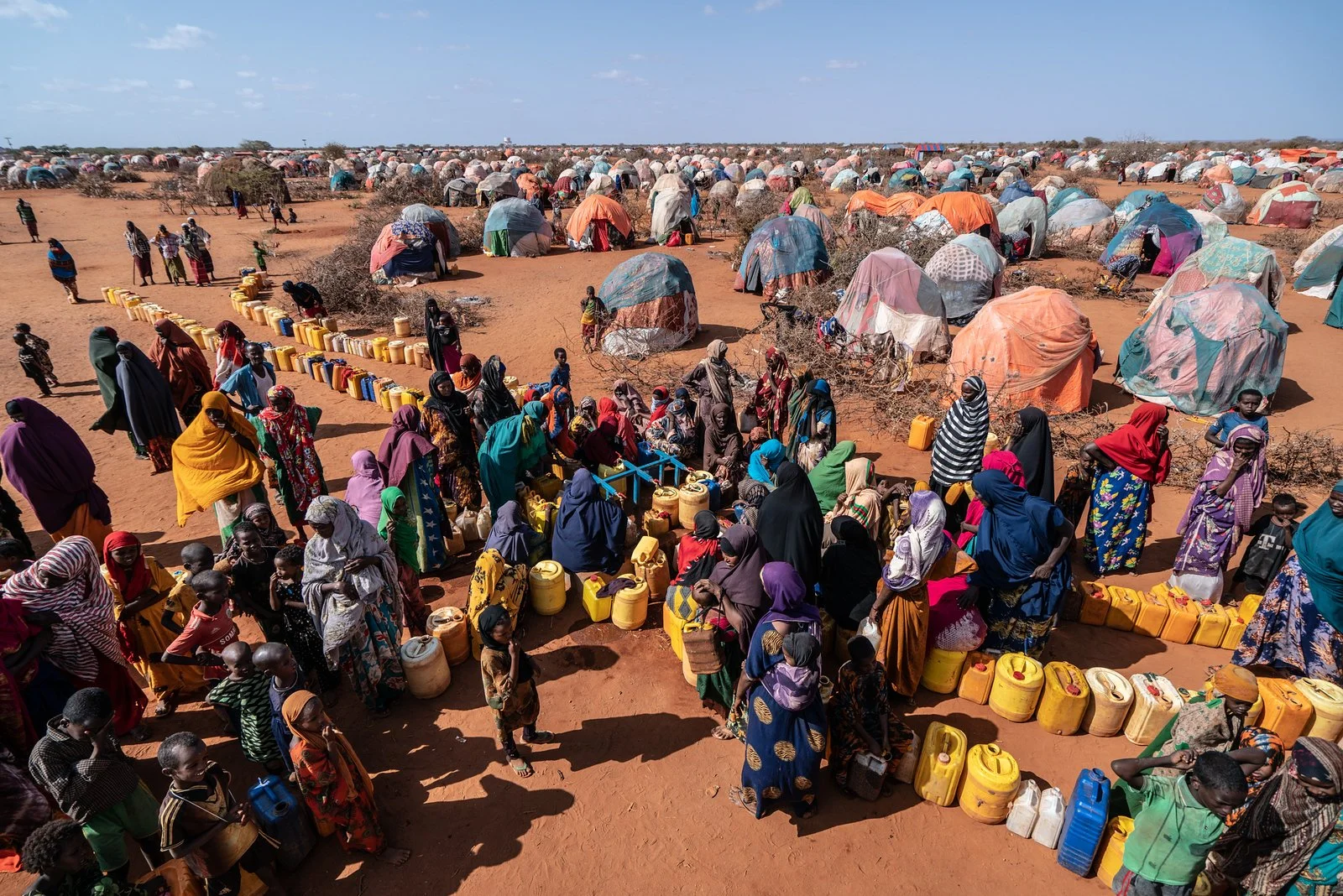
For decades, Somalia has endured prolonged conflict and extreme weather conditions. The humanitarian situation is complex, fuelled by conflict and insecurity, widespread displacement, climate shocks, especially droughts and floods, poverty, and lack of access to basic services. Floods and droughts increasingly alternate in Somalia, with severe repercussions on agriculture and livestock that are essential for livelihoods and food security. An estimated 3.5 million people in Somalia are displaced, tied to climatic shocks and conflict.
With almost 6 million people in need and 4.5 million targeted for humanitarian assistance according to the 2025 HNRP, it is vital that response actors ensure complementarity between humanitarian, development and peacebuilding efforts. While food is ranked first among households’ priority needs, and half of Somalia’s population is water insecure, people regularly tell us that they want more than short term assistance that keeps them reliant on aid. They want sustainable support that helps them towards a resilient future.
Our work
Ground Truth Solutions has been tracking the experiences of aid recipients in Somalia and Somaliland since 2017. From 2019-2022, Ground Truth Solutions operated the Cash Barometer in Somalia, an independent accountability mechanism aimed at making the views of cash and voucher recipients a central part of decision-making.
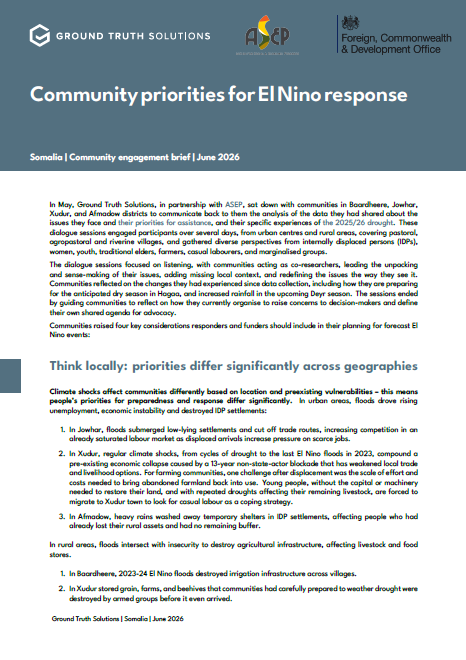
Funded by FCDO, Ground Truth Solutions is now running a three-year project to understand the perceptions of community members, especially people belonging to marginalised groups, and uncover their priorities when it comes to issues that affect them, including humanitarian support, protection concerns, and resilience building efforts. We will do this through quantitative and qualitative research, as well as dialogue with communities, humanitarian and development actors, and government. The project places particular focus on the views of marginalised groups and youth, who are often excluded from aid and who will play a central role in Somalia’s future resilience strategies.
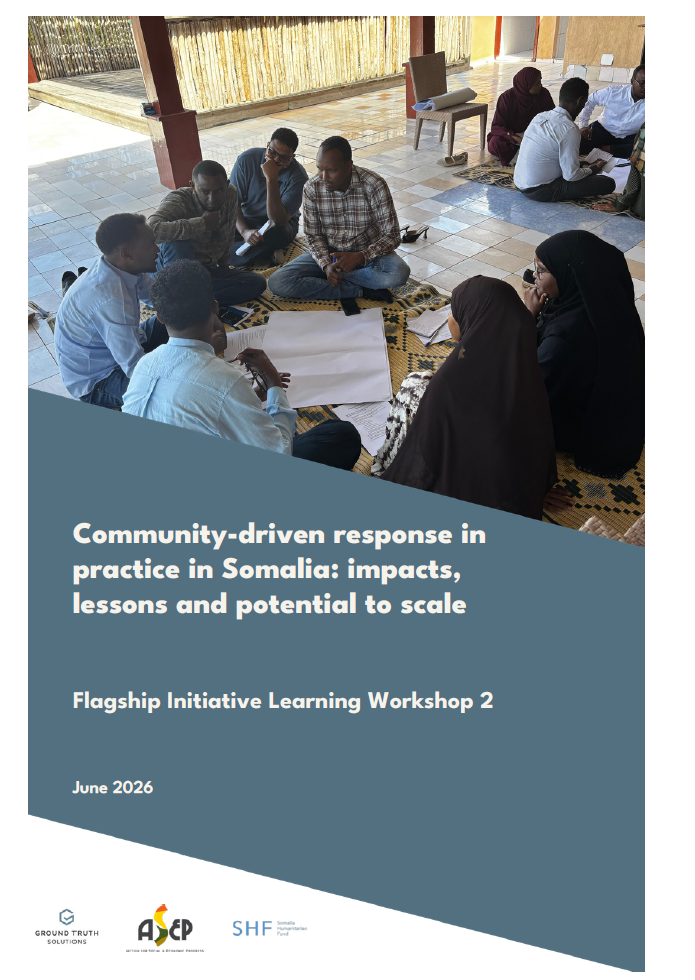
We will support humanitarian actors through workshops and other advocacy means to better design programmes around the priorities of local communities, and align with their own strategies and plans for building resilience.
“Currently, we rely on humanitarian agencies to provide essential services such as health and education. However, if one or two of these agencies experience funding shortages, it significantly affects many people. To create meaningful change, we need to shift from aid dependency towards building development and resilience within the communities. This can be achieved by offering high-quality education for the children, providing life skills training for youth, and implementing proper resettlement planning for us.”
Donors
GFFO, Norway, FCDO
Project partners
The Cash Working Group, the Food Security Sector, Danish Refugee Council, Fact Foundation